
( Production Process )
8-Stage
Process
( Process Logic )
Why the process is structured this way
Artemis does not treat pellet manufacturing as a single compression event. The process is built as a controlled chain in which each stage reduces variability before the next stage adds value.
Feedstock inconsistency is the real challenge in biomass. Moisture swings, particle size variation, contamination, and unstable binding behaviour can all destroy output quality if they are not corrected early. That is why intake control, drying, conditioning, and screening matter as much as pelletization itself.
For buyers, this means the process is designed around repeatability: stable moisture, controlled density, clear QC checkpoints, and dispatch traceability that ties each lot back to its production record.
Reception & Sorting
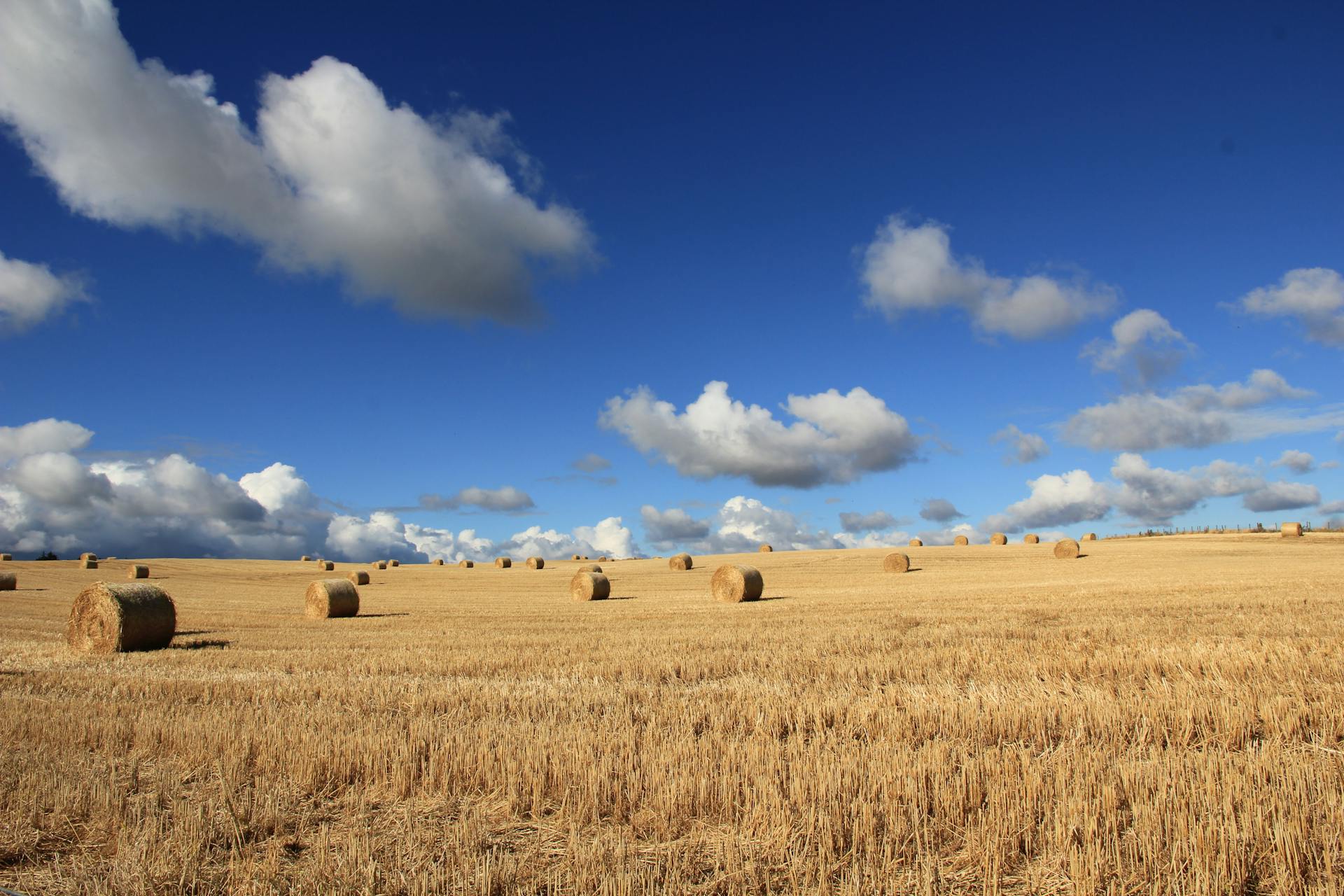
Every batch begins with inbound quality control. Biomass is weighed, moisture-sampled, and sorted by feedstock type before the line receives it. Foreign materials — stones, tramp metal — are removed here. Nothing advances without a passing intake record.
Quality checkpoints
- Moisture spot-check on intake
- Visual grading by material type
- Foreign particle and metal removal
- Weight verification and logging
Size Reduction
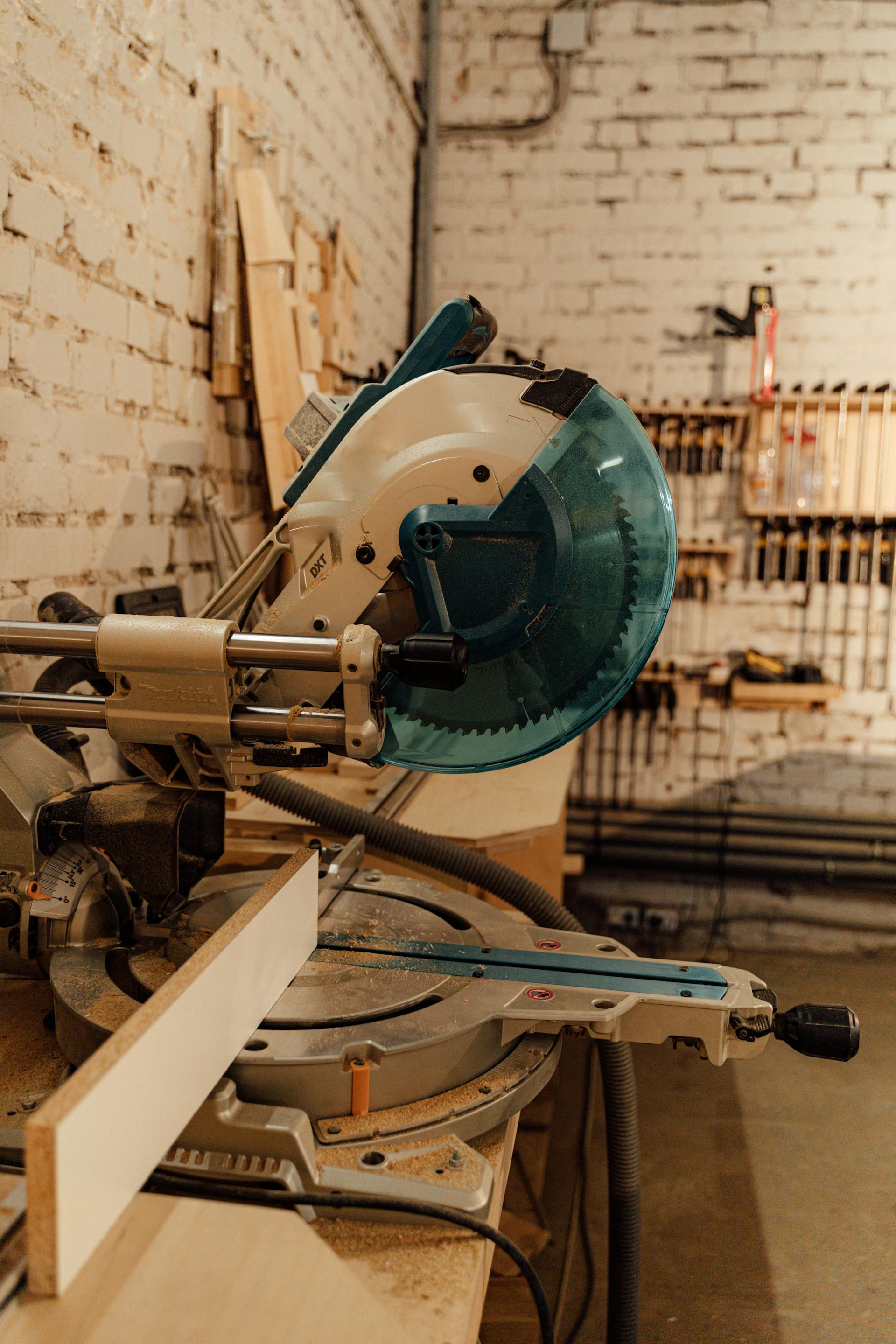
Hammer mill impact breaks feedstock into uniform 3–5 mm particles. Consistent particle size is critical — too coarse and the ring die cannot compress efficiently; too fine and bulk density suffers. Steel screen mesh controls output granularity.
Quality checkpoints
- Particle size distribution check
- Screen mesh integrity inspection
- Hammer wear monitoring
- Mill throughput logging
Drying
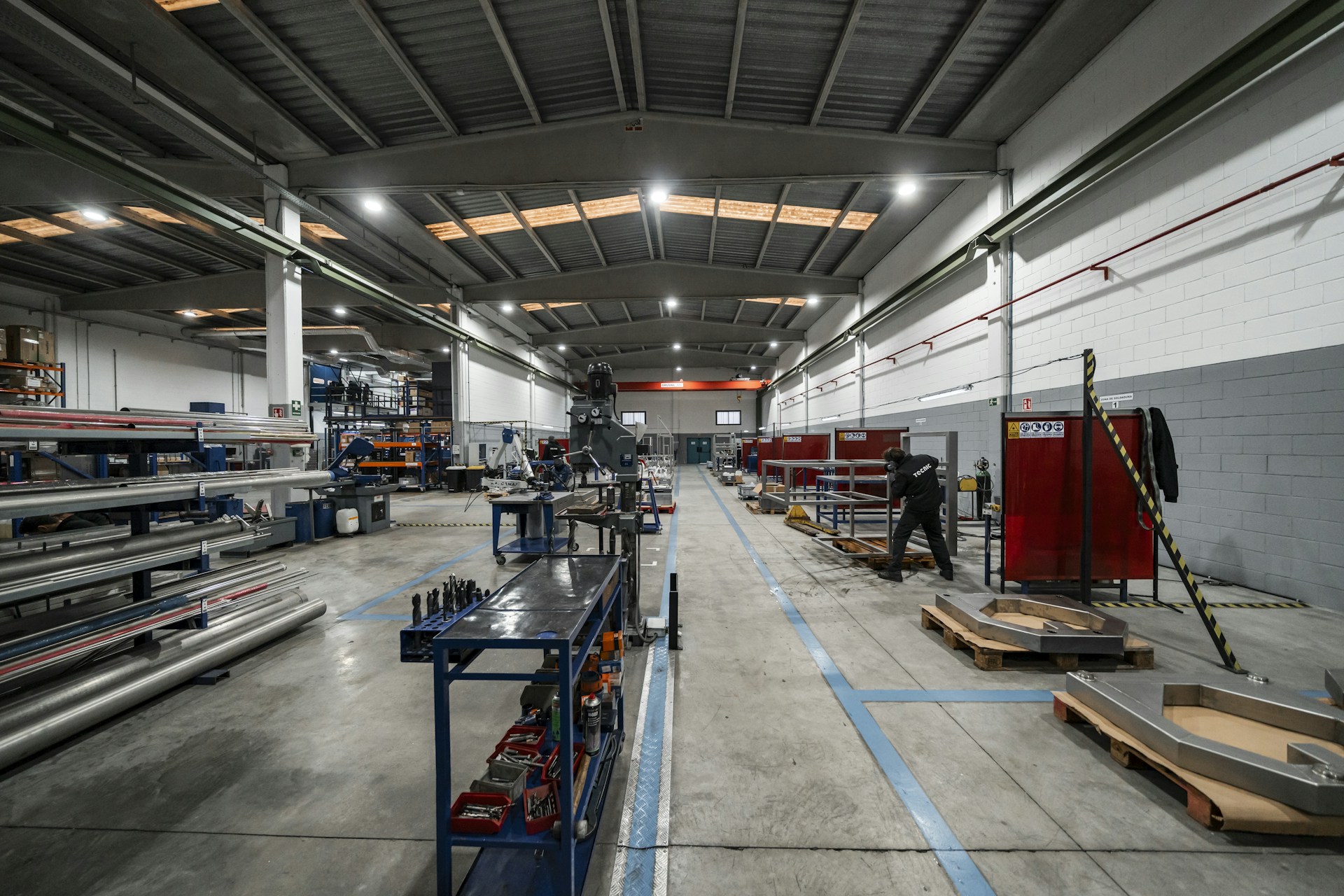
Moisture is reduced to the process-critical 10–15% range. Fresh agricultural residues can arrive at 25–40% moisture — direct pelletization at those levels is impossible. The drying stage uses controlled thermal energy to bring every particle within the binding window.
Quality checkpoints
- Moisture reading every 20 min
- Temperature uniformity scan
- Residence time logging
- Downstream moisture verification
Pre-conditioning
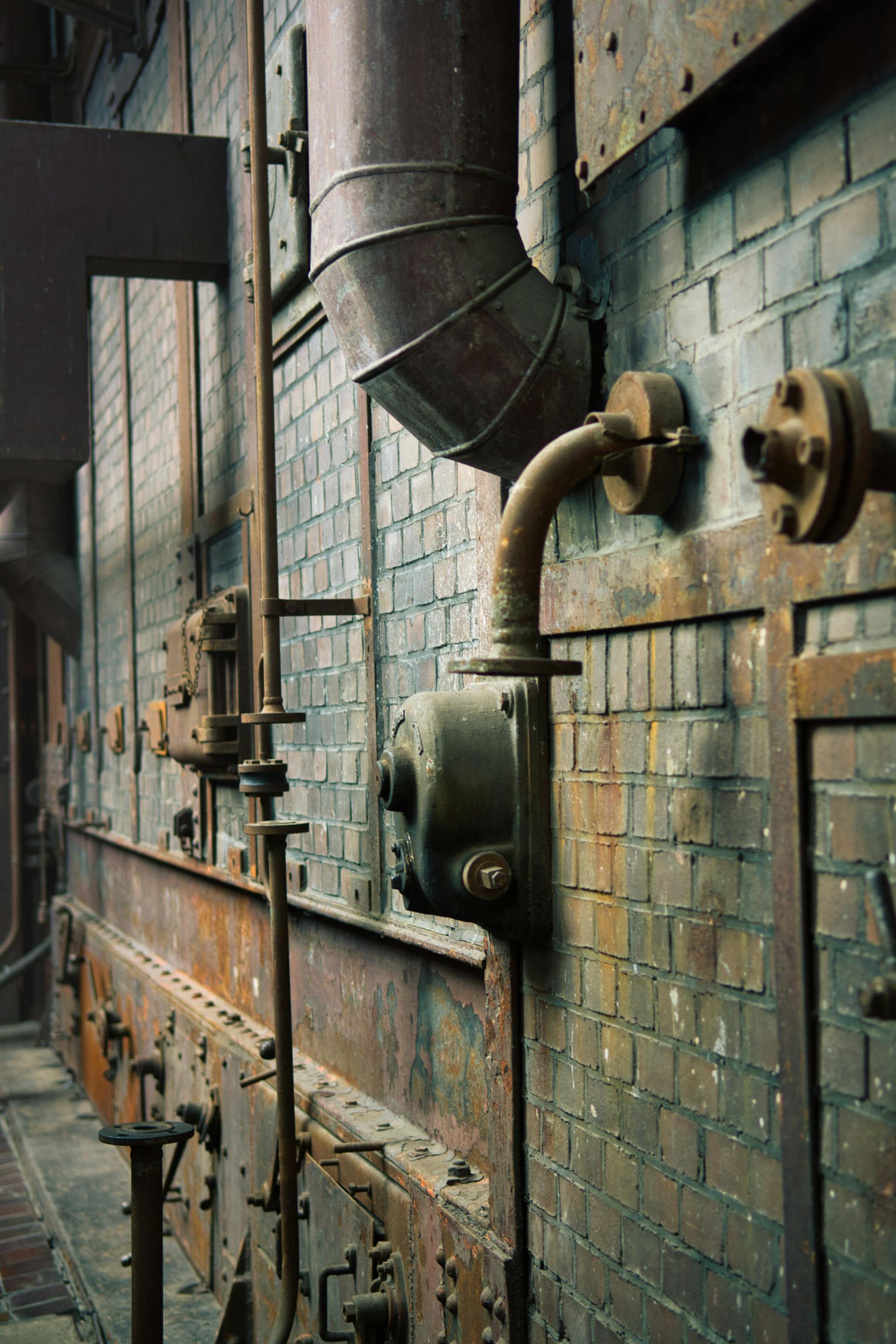
Steam and heat treatment softens lignocellulosic fibres ahead of die compression. Lignin — the natural binder — becomes thermoplastic above 70°C. Pre-conditioning ensures every particle enters the ring die in its optimal binding state, reducing die wear and improving the durability index.
Quality checkpoints
- Steam pressure monitoring
- Conditioner exit temperature
- Fibre softness tactile check
- Residence time validation
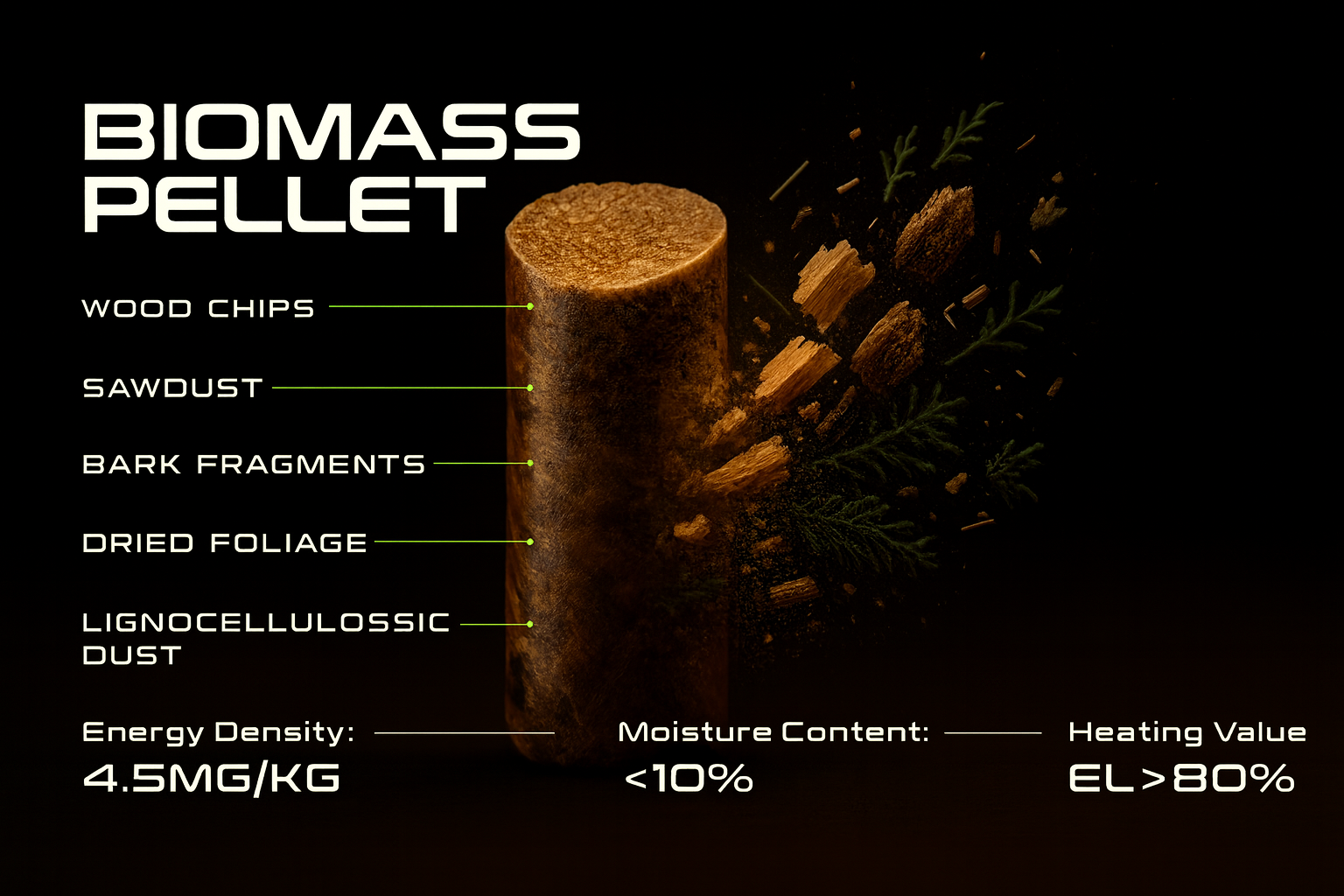
Pelletization
The core of the plant. Two 132 kW ring die mills press conditioned meal through hardened steel dies at 70–90°C. Die aperture — 6 mm, 8 mm, or 10 mm — determines product format. Die geometry, rotation speed, and feed rate are tuned per feedstock blend.
Quality checkpoints
- Pellet diameter measurement
- Die temperature monitoring
- Density spot-check (1.1–1.3 g/cm³)
- Line throughput per shift
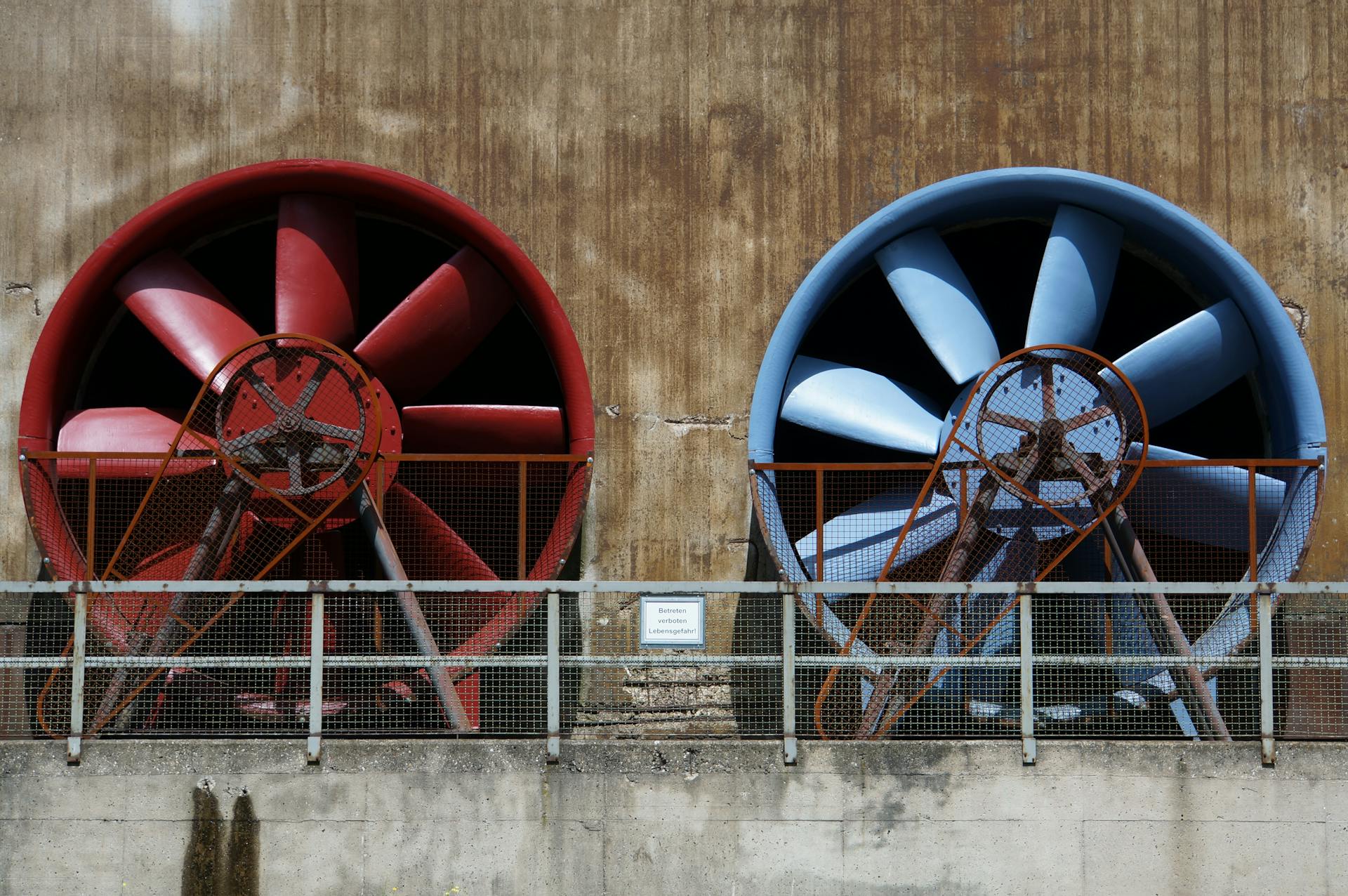
Cooling
Freshly formed pellets exit the die at 80–90°C and are still mechanically soft — they must be cooled before handling. Counter-flow coolers reduce temperature to within 5°C of ambient, allowing moisture equilibration and preventing condensation-induced surface cracking.
Quality checkpoints
- Exit temperature check (≤ ambient +5°C)
- Moisture equilibration reading
- Crack resistance tactile test
- Cooler fan performance log

Screening
Vibrating screens separate undersized fines from on-spec pellets. Fines are recycled back to pre-conditioning — nothing is wasted. On-spec pellets advance to packaging. The durability index (> 97%) is validated here using the tumbling method per ISO 17831.
Quality checkpoints
- Durability index (ISO 17831)
- Fines percentage by weight
- Screen mesh integrity check
- Size distribution sampling
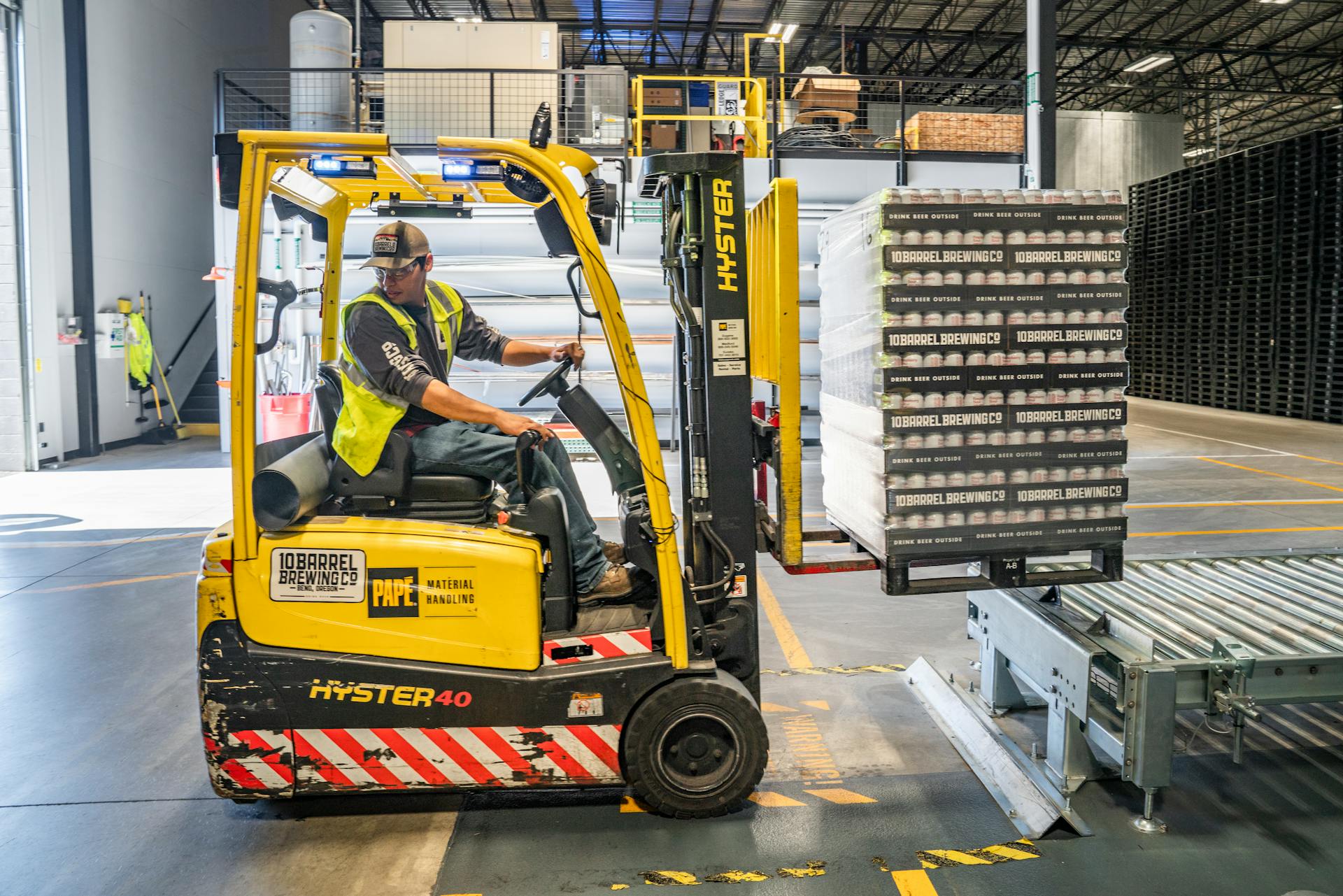
Packaging & Dispatch
Graded pellets are weighed and filled into 25 kg, 50 kg, or bulk bags. Each lot receives a unique code linking it to the full production batch record — feedstock origin, moisture readings, density, and QC results. This traceability data syncs automatically to the B2B portal.
Quality checkpoints
- Fill weight accuracy ±0.1 kg
- Seal integrity inspection
- Lot code and label verification
- Dispatch record and traceability log
( Energy Profile )
Power by Stage
Combined installed capacity of 600 kW. Stage 05 (pelletization) accounts for 44% of total plant power — the ring die is the dominant energy consumer.
( End Product )
What Leaves the Plant
6 mm Pellets
4200–4500 kcal/kg · Ash < 2% · Moisture < 10%
Premium residential and industrial boiler grade
8 mm Pellets
4200–4500 kcal/kg · Ash < 2% · Durability > 97%
Standard industrial and co-firing grade
10 mm Pellets
4200–4500 kcal/kg · Industrial boiler spec
Heavy industrial and cement kiln grade
Briquettes
High density block · Controlled ash · Stable burn
Thermal systems and district heating