
( Finished Products )
Fuel
Formats
( Select Format )
Choose the buying format
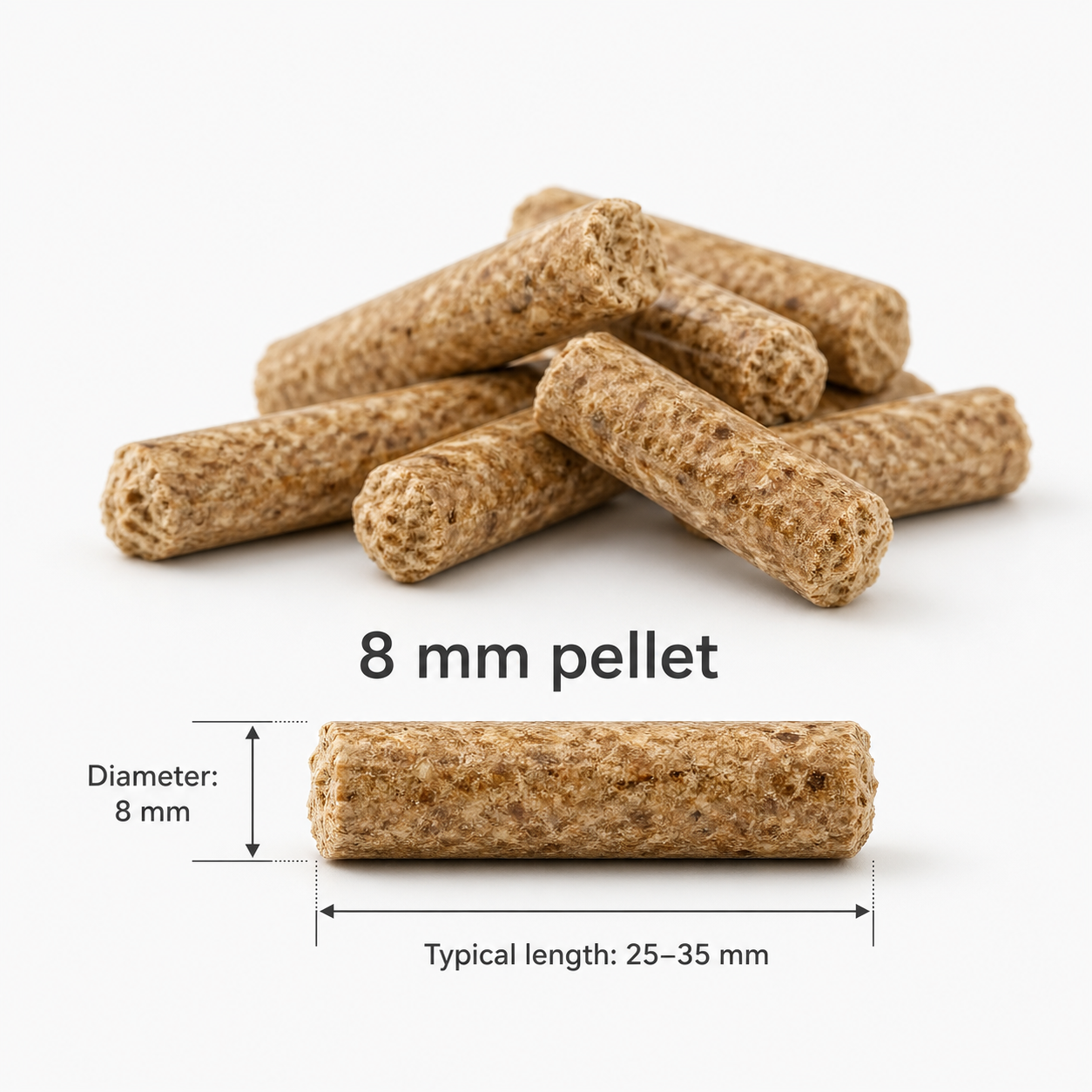
ISO 17225-2 Class A1
8 mm
The main industrial format in the Artemis portfolio — the default buying format for boilers, co-firing programmes, and first commercial trials.
Sulfur< 0.05%
Nitrogen< 0.5%
Durability testISO 17831 tumble
Calorific methodASTM E711
( Side by Side )
Format comparison
6 mm
8 mm
10 mm
Block
Calorific value (kcal/kg)
4200–4500
4200–4500
4200–4500
3800–4300
Ash content (%)
< 2%
< 2%
< 2%
< 4%
Moisture (%)
< 10%
< 10%
< 10%
< 12%
Bulk density (g/cm³)
1.10–1.25
1.10–1.25
1.08–1.22
1.0–1.15
Durability index (%)
> 97%
> 97%
> 97%
> 94%
( Fuel Transition )
How biomass compares to conventional fuels
Thermal Coal
5500–6500 kcal/kgCO₂ 90–95 kg/GJAsh 10–25%S 0.4–3%
High calorific but far higher CO₂, ash, and sulfur burden
Lignite
2500–4000 kcal/kgCO₂ 95–100 kg/GJAsh 15–40%S 0.5–4%
Lower calorific value and highest pollutant load of all fuels
Biomass Pellets
4200–4500 kcal/kgCO₂ < 5 kg/GJ*Ash < 2%S < 0.1%
Near carbon-neutral on lifecycle basis — low ash, low sulfur, stable heat
* Sourced from agricultural residue, zero-waste pathway
Natural Gas
8500 kcal/kgCO₂ 55 kg/GJAsh 0%S < 0.01%
Cleanest fossil fuel but price-volatile and infrastructure-dependent