Precision biomass fuel partner for industrial heat, evidence-ready reporting, and client-facing transition planning.
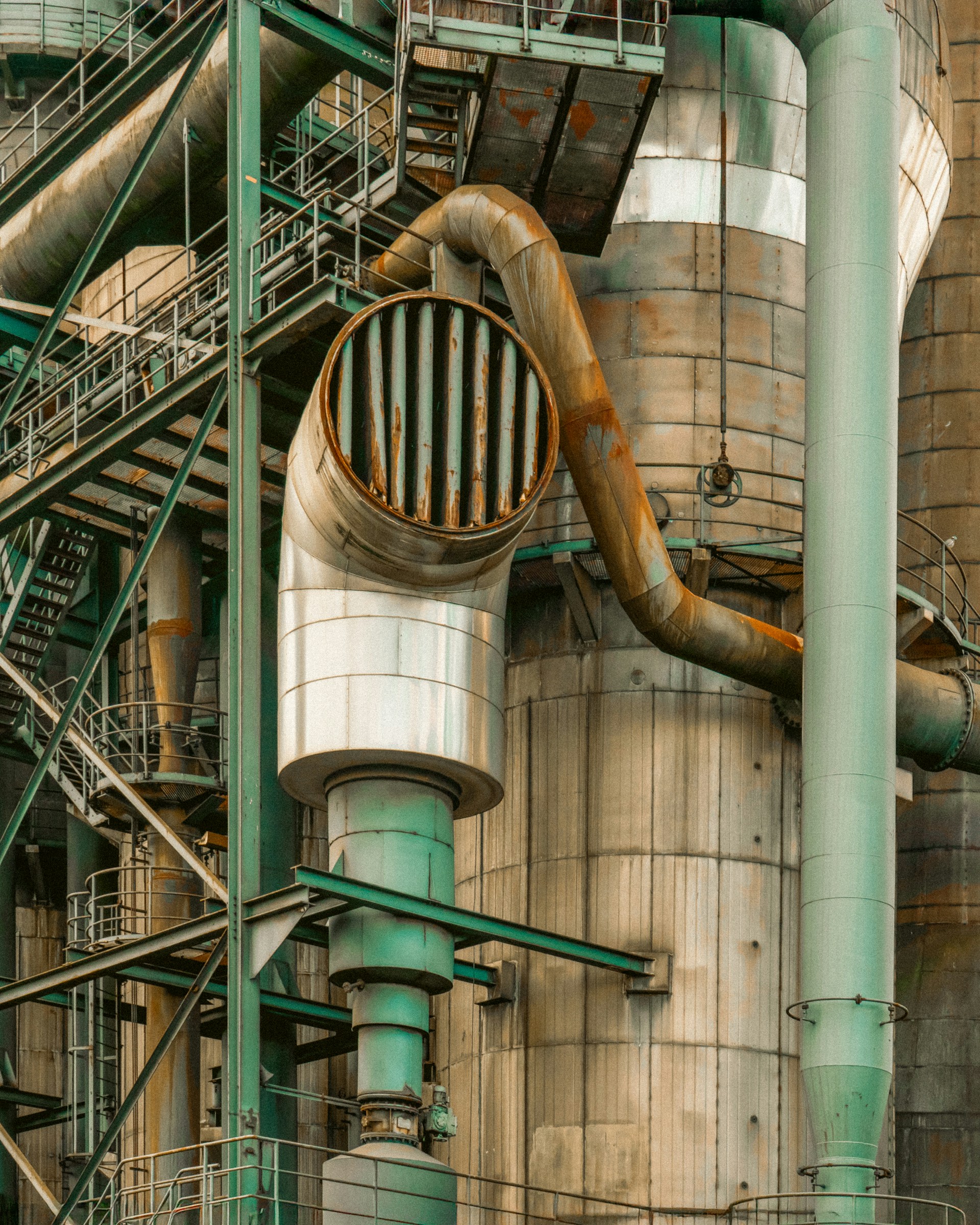
Industrial process heat facility — biomass transition underway
Prepared for procurement, operations, finance, and sustainability leaders
Carbon Markets for Industrial Boiler Buyers
Best fit for buyers running process steam or thermal-oil systems who need lower Scope 1 intensity without waiting for a full plant rebuild.
Artemis helps buyers lower fossil heat demand first. Carbon markets then become a residual-planning tool, not a substitute for direct decarbonization. This one-pager is written for board reviews, procurement committees, finance teams, and sustainability leads evaluating industrial boiler transitions.
Process steam and thermal-oil operators
after direct fuel switching is evidenced
Industrial process heat facility — biomass transition underway
( Executive Brief · April 2026 )
Carbon Markets for Industrial Boiler Buyers
Artemis helps buyers lower fossil heat demand first. Carbon markets then become a residual-planning tool, not a substitute for direct decarbonization. This one-pager is written for board reviews, procurement committees, finance teams, and sustainability leads evaluating industrial boiler transitions.
Download uses your browser's Save as PDF destination with a sector-specific file name.
Industrial BoilersProcess steam and thermal-oil buyersPower GenerationCaptive and utility co-firingCement & CeramicsKilns and pre-calciner blendsFood ProcessingClean steam and audit-ready heat
Switch part of the thermal load to Artemis biomass, preserve the evidence trail, and only then decide whether residual emissions require credits, certificates, or another market instrument.
It improves procurement credibility, ESG responsiveness, and net-zero planning discipline at the same time while avoiding weak or confused claim language.
( Board Lens )
Industrial Boiler Decision View
For steam buyers, the carbon-market decision starts after the fuel-switch decision.
The real gain is not simply buying credits. It is shrinking the residual footprint, improving auditability, and strengthening how the site answers ESG, procurement, and customer questions.
Artemis fits the part of the stack a buyer can control immediately: biomass substitution, batch traceability, QC evidence, and operating support for carbon-accounting workpapers.
Approve immediately
Fuel-switch scope, plant baseline measurement, recurring evidence pack, and internal ownership across procurement, operations, and sustainability.
Validate before any claim
Residual-emission boundary, methodology, public claim language, and whether the client is solving for compliance, voluntary reporting, or customer disclosure.
Avoid saying
That biomass procurement alone creates tradable credits, that RECs solve boiler emissions, or that buying credits is equivalent to direct decarbonization.
( Market Types )
Match the Instrument to the Decision
Compliance Markets
When to use it
Best when the site or sector faces a formal obligation, intensity target, or tradable compliance exposure.
Client benefit
Shrinks the volume of emissions the client still has to manage through allowances, compliance instruments, or penalty-risk decisions.
Where Artemis fits
Artemis lowers the thermal-fuel component before the compliance strategy is optimized.
Voluntary Carbon Credits
When to use it
Best for residual emissions inside internal net-zero plans, customer commitments, or ESG programmes after the boiler fuel mix has already improved.
Client benefit
Lets the buyer address what is hard to abate without presenting credits as a substitute for the operating change itself.
Where Artemis fits
Artemis makes the voluntary-credit strategy more credible by reducing the residual first.
RECs / EACs
When to use it
Best for purchased-electricity claims and renewable power matching, not for direct thermal combustion claims in the boiler house.
Client benefit
Stops the client from mixing electricity certificates with thermal fuel claims, which is a common reporting mistake.
Where Artemis fits
Artemis addresses heat and steam decarbonization while RECs or EACs, if needed, address the electricity side separately.
Supply-Chain Insetting
When to use it
Best when the client wants lower-emission outcomes tied directly to procurement decisions and supplier behavior rather than a distant project credit.
Client benefit
Helps with tender positioning, downstream customer narratives, and internal procurement strategy around real fuel choices.
Where Artemis fits
Artemis traceability and residue sourcing support a supply-chain story that is more tangible than a disconnected offset purchase.
( Review Discipline )
What Teams Should Validate Before Any Credit Purchase
Quantify the existing coal or fossil-heat baseline at the boiler and plant level.
Define how much Artemis biomass can be introduced without compromising steam reliability or fuel handling.
Preserve batch QC, feedstock, and dispatch records from the first commercial delivery onward.
Separate direct operational reduction from any later offset, certificate, or allowance strategy.
Confirm whether the real decision driver is compliance, voluntary reporting, customer disclosure, or financing.
Only evaluate credits after the residual footprint and the evidence boundary are both understood clearly.
Questions that force clarity
What exact emissions source is this instrument addressing: boiler fuel, purchased electricity, logistics, or residual footprint?
Does the methodology actually allow the claim language the client wants to use publicly or contractually?
Which records will internal audit, customers, lenders, or procurement committees ask to see if the claim is challenged?
Would the client get more value from deeper fuel switching first before buying any external instrument?
( Further Reading )
Sources & External References
The following publications, standards, and regulatory instruments informed this brief. All sources are publicly available and recommended for teams building formal carbon-accounting workpapers.
Bureau of Energy Efficiency — Perform, Achieve & Trade Scheme
India's industrial energy intensity compliance framework relevant to boiler operators.
https://beenew.beeindia.gov.in/content/pat-schemeBIS IS 17084:2018 — Specification for Wood Pellets
Indian standard governing biomass pellet quality, moisture, ash content, and durability for industrial use.
https://www.bis.gov.inIPCC AR6 — Mitigation of Climate Change (Chapter 7: Agriculture, Forestry)
Authoritative emissions factor guidance and bioenergy decarbonization pathways.
https://www.ipcc.ch/report/ar6/wg3/Science Based Targets Initiative — Corporate Net-Zero Standard
Defines what constitutes a credible net-zero claim and how residual emissions must be addressed.
https://sciencebasedtargets.org/net-zeroIndian Carbon Exchange (ICX) — Carbon Credit Trading Scheme
India's domestic compliance carbon market under the Energy Conservation (Amendment) Act 2022.
https://www.icx.inCPCB — Emission Standards for Boilers
Central Pollution Control Board standards governing boiler emissions and fuel quality in India.
https://cpcb.nic.inPrepared by
Artemis Renewable Energy India LLP
Sindewahi · Chandrapur · Maharashtra · India
seema@artemisrenewable.in · +44 7990 300543
LLPIN ACP-1207 · Incorporated 13 June 2025 under the Limited Liability Partnership Act 2008. This document is for informational purposes only. All figures are illustrative benchmarks. Always engage qualified carbon accountants and legal counsel for formal submissions.
Visit full site
artemisrenewable.in