Precision biomass fuel partner for industrial heat, evidence-ready reporting, and client-facing transition planning.
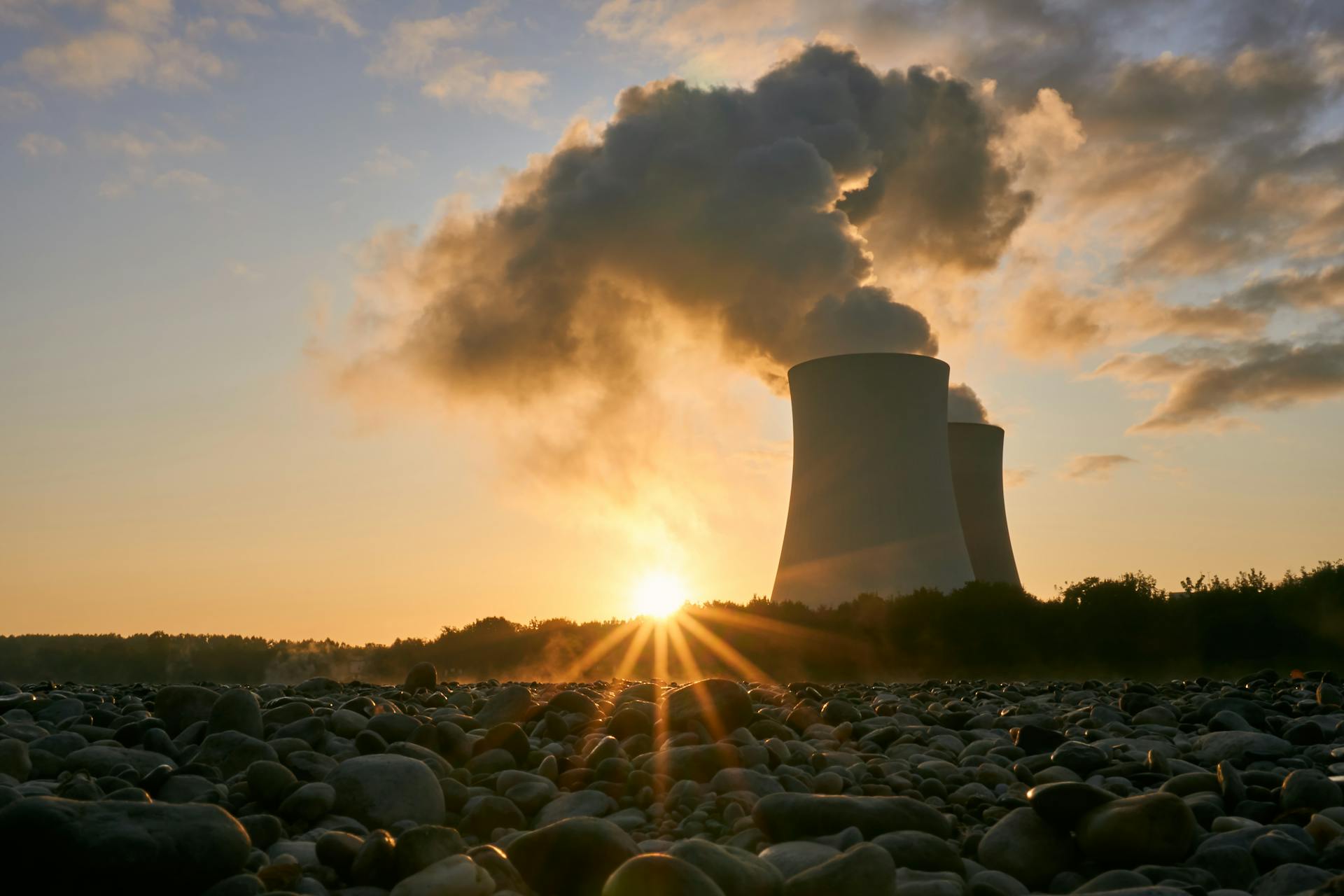
Utility-scale thermal plant — co-firing transition candidate
Prepared for procurement, operations, finance, and sustainability leaders
Carbon Markets for Power Generation Buyers
Built for captive plants and utility co-firing teams managing larger fuel-switch volumes, regulatory scrutiny, and benchmark-driven reporting.
For power buyers, the commercial question is not only whether biomass can be introduced, but how much thermal coal exposure can be displaced before compliance, reporting, or credit decisions are made on the residual. Artemis is the operating layer in that equation.
Captive and utility co-firing teams
after co-firing evidence is locked in
Utility-scale thermal plant — co-firing transition candidate
( Executive Brief · April 2026 )
Carbon Markets for Power Generation Buyers
For power buyers, the commercial question is not only whether biomass can be introduced, but how much thermal coal exposure can be displaced before compliance, reporting, or credit decisions are made on the residual. Artemis is the operating layer in that equation.
Download uses your browser's Save as PDF destination with a sector-specific file name.
Industrial BoilersProcess steam and thermal-oil buyersPower GenerationCaptive and utility co-firingCement & CeramicsKilns and pre-calciner blendsFood ProcessingClean steam and audit-ready heat
Use Artemis biomass to reduce coal burn first, then decide how any remaining regulatory or residual exposure should be managed through compliance instruments or credits.
High-volume fuel switching can materially reduce the footprint under review before a plant spends on additional market instruments.
( Board Lens )
Power Plant Decision View
For co-firing programmes, the carbon-market gain comes from reducing allowance exposure before trading for the remainder.
Power buyers usually have the clearest baseline, the highest thermal volumes, and the most visible reporting pressure. That makes disciplined fuel-switch evidence especially valuable.
Artemis contributes where the plant can act immediately: qualified biomass supply, auditable dispatch, and documentation that supports both operational reporting and later market decisions.
Approve immediately
Co-firing envelope, fuel blending rules, baseline measurement, and a reporting owner who can link procurement to emissions outcomes.
Validate before any claim
How the plant will distinguish direct coal displacement from later certificate or allowance activity, and what claim language regulators or counterparties will tolerate.
Avoid saying
That biomass automatically creates a tradable credit position or that co-firing evidence can be inferred without specific fuel and dispatch records.
( Market Types )
Match the Instrument to the Decision
Compliance Markets
When to use it
Most relevant where the plant sits inside a regulated framework, benchmark, or emission-intensity obligation.
Client benefit
Reduces the volume of exposure that still has to be managed through compliance instruments or penalties.
Where Artemis fits
Artemis reduces the coal side of the equation before compliance strategies are optimized.
Voluntary Carbon Credits
When to use it
Useful when the power buyer also has corporate net-zero commitments beyond strict regulatory exposure.
Client benefit
Lets the organization address the residual after operational co-firing progress is already measurable.
Where Artemis fits
Artemis makes any later voluntary-credit strategy more defensible by improving the direct-reduction story first.
RECs / EACs
When to use it
Relevant if the organization also needs renewable-electricity matching outside the thermal co-firing question.
Client benefit
Prevents the buyer from confusing generation-attribute instruments with fuel-switch performance in the boiler or furnace.
Where Artemis fits
Artemis handles fuel displacement; RECs or EACs solve a different electricity-attribute question.
Supply-Chain Insetting
When to use it
Useful where downstream offtakers or investors want to see lower-emission outcomes tied to the actual fuel chain.
Client benefit
Supports procurement narratives built on real sourcing and co-firing behavior rather than distant projects.
Where Artemis fits
Artemis traceability and sourcing records create a more concrete insetting story for power buyers.
( Review Discipline )
What Teams Should Validate Before Any Credit Purchase
Measure the current coal baseline by unit, shift, or reporting boundary.
Confirm the practical Artemis co-firing range without destabilizing operations.
Track blend ratios, dispatch data, and lot-level evidence from the first power-sector shipment.
Separate coal-displacement reporting from any later credit, certificate, or allowance strategy.
Clarify whether the plant is solving for compliance exposure, corporate target pressure, or both.
Only evaluate the external market position after the co-firing evidence set is robust enough to withstand review.
Questions that force clarity
What portion of the plant footprint can actually be reduced through biomass before any external instrument is considered?
How will the plant prove coal displacement if a regulator, counterparty, or investor asks for underlying records?
Is the organization solving a compliance exposure, a corporate disclosure issue, or a mixed objective?
Would buying fewer instruments later create more value than entering the market too early?
( Further Reading )
Sources & External References
The following publications, standards, and regulatory instruments informed this brief. All sources are publicly available and recommended for teams building formal carbon-accounting workpapers.
Ministry of Power — Biomass Co-firing Directive (7% Mandate FY 2025-26)
Mandates 7% biomass co-firing at coal-based thermal power stations. Operationally binding for NTPC and state utilities.
https://powermin.gov.inCentral Electricity Authority — Technical Standards for Co-firing
CEA specifications on pellet quality, moisture, and blending ratios for compliant co-firing programmes.
https://cea.nic.inNTPC — Sustainability Report 2023-24
India's largest power utility disclosing co-firing targets, pellet procurement strategy, and Scope 1 reduction pathways.
https://www.ntpc.co.in/sustainabilityIEA — Bioenergy for Power Generation (Technology Report)
Global benchmark on biomass co-firing efficiency, emission factors, and lifecycle assessment methodology.
https://www.iea.org/energy-system/power/bioenergyIndian Carbon Exchange (ICX) — Carbon Credit Trading Scheme
Domestic compliance carbon market; power sector among primary obligated entities under PAT and CCM schemes.
https://www.icx.inMAHAGENCO — Sustainable Fuel Policy
Maharashtra State Power Generation Company procurement standards — relevant for buyers supplying MAHAGENCO plants including STPS Chandrapur.
https://mahagenco.inPrepared by
Artemis Renewable Energy India LLP
Sindewahi · Chandrapur · Maharashtra · India
seema@artemisrenewable.in · +44 7990 300543
LLPIN ACP-1207 · Incorporated 13 June 2025 under the Limited Liability Partnership Act 2008. This document is for informational purposes only. All figures are illustrative benchmarks. Always engage qualified carbon accountants and legal counsel for formal submissions.
Visit full site
artemisrenewable.in